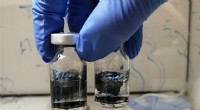
1. Instability and Decomposition: Nitric acid is a strong oxidizing agent and can decompose in the presence of light and heat. This decomposition can lead to the formation of nitrogen oxides, which can interfere with the titration process.
2. Reaction with Glass: Nitric acid can react with glass, especially over time, which can affect the accuracy of the solution's concentration.
3. Difficult to Prepare and Standardize: It is difficult to prepare and standardize nitric acid solutions accurately due to its volatility and tendency to decompose.
4. Availability of Other Strong Acids: Other strong acids like hydrochloric acid (HCl) and sulfuric acid (H₂SO₄) are more stable, readily available, and easier to handle. They are also readily available in high purity, making them ideal for use as standard solutions.
5. Interference with Certain Analytes: In some cases, nitric acid can react with the analyte being titrated, making it unsuitable for use in the specific titration.
6. Safety Concerns: Nitric acid is a strong acid and can be corrosive. It's important to handle it with proper safety precautions.
Therefore, while nitric acid is a strong acid, it is not often used as a standard solution for neutralization titrations due to its instability, reactivity, and difficulty in handling compared to other readily available strong acids.