The Atom: The Real Deal
* Physically Exists: An atom is a real, physical entity. It's the fundamental building block of matter, incredibly small and containing protons, neutrons, and electrons.
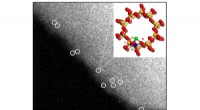
* Observable: While we can't see atoms directly, their effects are observable through experiments and technology.
* Complex and Dynamic: Atoms are incredibly complex, with intricate interactions between subatomic particles, and they constantly move and interact with each other.
The Model of the Atom: Our Representation
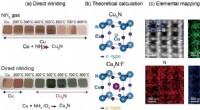
* Simplification: A model of the atom is a simplified representation of its structure and behavior. It helps us understand something too small to see directly.
* Visual Aid: Models use visual tools like diagrams, spheres, and even computer simulations to explain atomic concepts.
* Evolving: As our understanding of atoms grows, models change and become more sophisticated.
Think of it like this:
* Imagine you want to explain how a car works. You could build a miniature model of the car, showing the engine, wheels, and steering. That's the model.
* But the actual car is far more intricate, with thousands of parts working together. That's the real thing, and the model is a helpful representation.
Key Points to Remember:
* Models aren't perfect: They are approximations and always subject to refinement.
* Models are useful: They help us understand the invisible world of atoms and make predictions about their behavior.
* Atoms are the real thing: They are the actual building blocks of everything around us.
Let me know if you'd like to explore a specific model of the atom or any aspect in more detail!