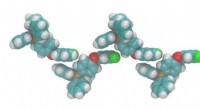
Para Toluenesulfonic acid, also known as p-toluenesulfonic acid, is a white crystalline organic compound with the formula CH₃C₆H₄SO₃H. It is a strong organic acid, often used as a catalyst in various chemical reactions and processes.
Key properties:
* Strong acid: p-TSA is a strong organic acid with a pKa of -2.1, similar to sulfuric acid.
* Solubility: It is highly soluble in water, alcohols, and ethers, but less soluble in non-polar solvents.
* Solid: It is a solid at room temperature, forming colorless or slightly yellow crystals.
* Hygroscopic: It readily absorbs moisture from the air, which can lead to deliquescence (becoming liquid).
* Corrosive: Like other strong acids, p-TSA is corrosive and can cause burns if it comes into contact with skin.
Applications:
* Catalyst: It is widely used as a catalyst in various organic reactions, such as esterification, dehydration, and alkylation.
* Acidifying agent: It can be used to acidify solutions and adjust pH.
* Dyes and pigments: p-TSA is used in the production of dyes and pigments.
* Pharmaceuticals: It finds application in the synthesis of pharmaceuticals.
* Other applications: It is also used in the production of resins, polymers, and other chemical products.
Safety and Handling:
* p-TSA is corrosive and should be handled with care.
* Wear appropriate personal protective equipment, including gloves, goggles, and lab coats.
* Avoid contact with skin, eyes, and clothing.
* Store it in a well-ventilated area away from heat and moisture.
Overall, p-TSA is a versatile and important compound with various applications in different industries. Its strong acidity and catalytic properties make it a valuable reagent in organic chemistry and related fields.