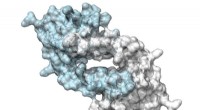
* The enzyme has a broad substrate specificity. This means it can bind to and catalyze reactions involving molecules with similar structures. Enzymes are highly specific, but some have a broader range of molecules they can work with.
Here's why the other options are less likely:
* The enzyme has two active sites. While possible, it's less likely. Enzymes typically have a single active site specifically designed for a particular substrate. Having two distinct active sites would be unusual.
* The enzyme is regulated by two different mechanisms. While enzymes can be regulated, it's less likely that a single enzyme would have two independent regulatory mechanisms for two completely different reactions.
* The enzyme is present in two different forms. This is possible, but it would be unusual for an enzyme to have two distinct forms, each catalyzing a different reaction.
Further Investigation:
To determine the exact nature of this enzyme, you would need to conduct further research. This could include:
* Identifying the substrates and products of each reaction.
* Determining the enzyme's structure using techniques like X-ray crystallography.
* Investigating the enzyme's active site and its interaction with different substrates.
* Studying the enzyme's kinetics and reaction mechanisms.
This discovery could have significant implications for understanding enzyme function and developing new drugs or biocatalysts.