Here's how it works:
1. Light energy is absorbed by chlorophyll in the thylakoid membranes of chloroplasts.
2. This energy is used to excite electrons within the chlorophyll molecules.
3. These excited electrons are passed along an electron transport chain, releasing energy.
4. This energy is used to pump protons (H⁺) across the thylakoid membrane, creating a proton gradient.
5. The proton gradient drives the production of ATP (adenosine triphosphate), the energy currency of the cell.
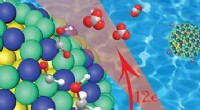
6. Meanwhile, the excited electrons are used to split a water molecule.
7. Water is split into 2 hydrogen ions (H⁺), 2 electrons (e⁻), and 1 oxygen atom (O).
8. The electrons replenish those lost by chlorophyll, allowing the process to continue.
9. The oxygen atoms combine to form molecular oxygen (O₂), which is released as a byproduct.
So, the splitting of water in the light reactions of photosynthesis is essential for both energy production (ATP) and the release of oxygen, which is vital for respiration in many organisms.