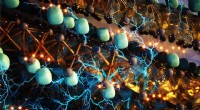
The structure of a protein molecule.
Here's how it breaks down:
* Atoms: Proteins are made up of amino acids, which are composed of atoms like carbon (C), hydrogen (H), oxygen (O), nitrogen (N), and sometimes sulfur (S).
* Molecules: Amino acids are linked together in a chain by peptide bonds, forming a polypeptide chain.
* Macromolecule: The polypeptide chain folds into a complex three-dimensional structure, forming a protein molecule. This folding is determined by the sequence of amino acids and interactions between different parts of the molecule.
Importance: The specific structure of a protein is crucial for its function. For example, the shape of an enzyme allows it to fit precisely with its substrate molecule, facilitating a chemical reaction.
Other examples:
* DNA structure: DNA is composed of nucleotides, which are made up of a sugar, a phosphate group, and a nitrogenous base. These nucleotides are linked together in a long chain, forming a double helix structure.
* Lipid structure: Lipids are composed of fatty acids and glycerol, which form a diverse range of structures, such as triglycerides and phospholipids, with important functions in energy storage and cell membranes.
In summary: The chemical level of structural organization describes how atoms and molecules interact to form larger, complex structures like proteins, DNA, and lipids, which are essential for the function of living organisms.