Here's how it works:
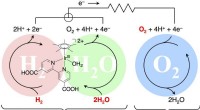
1. Proton Motive Force: As electrons move through the electron transport chain in the mitochondrial inner membrane, they pump protons (H+) from the mitochondrial matrix into the intermembrane space. This creates an electrochemical gradient, with a higher concentration of protons in the intermembrane space and a lower concentration in the matrix. The protons have potential energy stored in this gradient.
2. ATP Synthase: ATP synthase is a protein complex embedded in the inner mitochondrial membrane. It has two main parts:
* F0 subunit: This part acts as a channel that allows protons to flow back down the gradient from the intermembrane space into the matrix.
* F1 subunit: This part is responsible for synthesizing ATP from ADP (adenosine diphosphate) and inorganic phosphate (Pi).
3. ATP Synthesis: When protons flow through the F0 subunit, it spins a rotor within the complex. This spinning motion drives conformational changes in the F1 subunit, which catalyzes the phosphorylation of ADP to ATP.
Therefore, the flow of protons down the electrochemical gradient provides the energy needed for ATP synthase to generate ATP, the primary energy currency of cells.