Molecular size plays a crucial role in diffusion, which is the movement of molecules from an area of high concentration to an area of low concentration. Here's how:
Larger molecules diffuse slower than smaller molecules:
* Collision frequency: Larger molecules have a larger surface area and collide more frequently with other molecules, hindering their movement. This increased collision frequency slows down the diffusion rate.
* Viscosity: Larger molecules have greater resistance to flow, which makes it harder for them to navigate through a medium. Think of it like trying to push a large boulder through a crowded room versus pushing a small ball.
* Energetic requirements: Larger molecules require more energy to move, which can limit their diffusion rate, especially at lower temperatures.
Examples:
* Gases: Smaller gas molecules, like hydrogen (H2), diffuse much faster than larger gas molecules, like carbon dioxide (CO2).
* Liquids: Smaller molecules, like water (H2O), diffuse faster through a liquid than larger molecules, like glucose (C6H12O6).
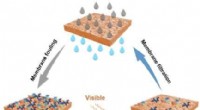
* Membranes: Cell membranes are selectively permeable, meaning they allow certain molecules to pass through while blocking others. This selectivity is partly based on molecular size. Smaller molecules can pass through membrane pores more easily than larger molecules.
Factors influencing the effect of size on diffusion:
* Temperature: Higher temperatures provide more kinetic energy to molecules, allowing them to move faster and overcome the resistance caused by size.
* Concentration gradient: A steeper concentration gradient creates a stronger driving force for diffusion, potentially overcoming the size-related limitations.
* Medium: The viscosity and composition of the medium can significantly affect diffusion rates, regardless of molecular size.
Summary:
In general, molecular size is inversely proportional to diffusion rate. Smaller molecules diffuse faster than larger molecules due to factors like collision frequency, viscosity, and energetic requirements. However, other factors like temperature, concentration gradient, and the medium itself also play a role in determining the overall diffusion rate.