1. The Octet Rule:
- Most atoms strive to have a full outer shell of electrons, usually containing eight electrons (the octet rule).
- Exceptions include hydrogen and helium, which only need two electrons to fill their outer shell.
- Having a full outer shell provides stability and minimizes reactivity.
2. Sharing Electrons:
- Atoms achieve this stable configuration by sharing their valence electrons (electrons in the outermost shell).
- These shared electrons form a covalent bond, holding the atoms together in a molecule.
3. Types of Covalent Bonds:
- Single Bond: One pair of electrons is shared between two atoms.
- Double Bond: Two pairs of electrons are shared.
- Triple Bond: Three pairs of electrons are shared.
4. Examples:
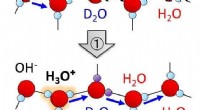
- Water (H₂O): Oxygen has 6 valence electrons and needs 2 more to complete its octet. Each hydrogen atom has 1 valence electron and needs 1 more. Oxygen shares one electron with each hydrogen atom, forming two single bonds.
- Carbon Dioxide (CO₂): Carbon has 4 valence electrons and needs 4 more. Oxygen has 6 valence electrons and needs 2 more. Carbon forms two double bonds with each oxygen atom, sharing two electrons with each oxygen.
5. Lewis Structures:
- Lewis structures are a simple way to represent covalent bonds and electron arrangements. They use dots to represent valence electrons and lines to represent shared electron pairs (bonds).
6. Polar Covalent Bonds:
- Sometimes, the electrons in a covalent bond are not shared equally between the atoms.
- This occurs when one atom is more electronegative (attracts electrons more strongly) than the other.
- This results in a polar bond, where one end of the bond has a slightly negative charge and the other end has a slightly positive charge.
In summary:
- Atoms in molecular compounds form stable electron arrangements by sharing their valence electrons through covalent bonds.
- This sharing allows atoms to achieve a full outer shell of electrons, which provides stability and minimizes reactivity.
- The type of covalent bond (single, double, or triple) depends on the number of electrons shared between the atoms.
- The electronegativity difference between atoms can lead to polar covalent bonds, where one end of the bond is slightly positive and the other is slightly negative.