Enzymes are biological catalysts, meaning they speed up reactions without being consumed in the process. They achieve this by providing an alternative reaction pathway with a lower activation energy, the minimum energy required for a reaction to occur.
Here's how it works:
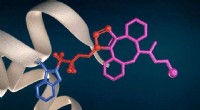
* Active Site: Enzymes have a specific region called the active site, which binds to the reactants (substrates) of the reaction.
* Lowering Activation Energy: The active site interacts with the substrate in a way that strains the bonds within the molecule, making it easier to break and form new bonds. This lowers the activation energy required for the reaction to proceed.
* Specificity: Enzymes are highly specific, meaning they usually only catalyze one or a small number of reactions. This specificity is due to the shape and chemical properties of the active site.
Examples of enzymes include:
* Lactase: Breaks down lactose (milk sugar).
* Amylase: Breaks down starch into sugars.
* DNA Polymerase: Builds DNA molecules.
In summary, enzymes are essential for life because they accelerate chemical reactions that would otherwise occur too slowly at body temperature.