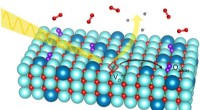
1. The "Sea of Electrons": Unlike other materials where electrons are tightly bound to individual atoms, metals have a unique structure. Their outermost electrons, called valence electrons, are loosely bound and can easily move freely throughout the metallic lattice. This creates a "sea of electrons" that can readily carry electrical charge.
2. Free Electron Movement: The electrons in this "sea" are not stationary. They constantly move randomly, but with a slight push (an electric field), they can move in a directed manner, creating an electric current.
3. Conductivity vs. Resistance: The ease with which electrons can move through a material determines its conductivity. Metals have low electrical resistance, which means electrons encounter minimal obstacles as they flow. This is why they are excellent conductors.
4. Heat Conductivity: The same "sea of electrons" also facilitates the transfer of heat energy. When one part of a metal is heated, the electrons absorb the energy and transfer it to other parts, resulting in efficient heat conduction.
In short, metals are good conductors due to the presence of a "sea of electrons" that can move freely, allowing for easy flow of electrical charge and heat energy.