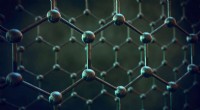
* Size: Molecules are incredibly small (nanometers in size). Visible light has wavelengths on the order of hundreds of nanometers. To see something, the wavelength of light used must be smaller than the object itself. Visible light is simply too large to resolve individual molecules.
* Diffraction: Even if we could use smaller wavelengths, like X-rays, to "see" molecules, the wave nature of light would cause significant diffraction. This means the light would bend around the molecules, blurring the image and making it impossible to see the individual structures clearly.
So, what can we do?
While we can't see molecules with our eyes, we can use various techniques to *indirectly* observe and study them:
* Electron microscopy: This technique uses electrons, which have much smaller wavelengths than light, to create images of very small objects. Electron microscopes can be used to visualize large molecules or even some small structures within a molecule.
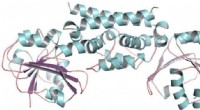
* X-ray crystallography: This technique uses X-rays to study the arrangement of atoms in a crystal. By analyzing the diffraction pattern of X-rays passing through a crystal, scientists can deduce the structure of the molecules within it.
* Spectroscopy: This technique uses the interaction of light with molecules to determine their structure and composition. Different types of spectroscopy use different wavelengths of radiation, like infrared or ultraviolet light.
* Atomic force microscopy (AFM): This technique uses a sharp probe to scan the surface of a material. AFM can be used to image individual molecules, providing information about their shape and size.
These techniques allow us to "see" molecules in various ways, but not in the traditional sense of visual observation.