1. Conduction:
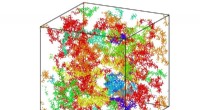
* How it works: Conduction occurs when heat is transferred through direct contact between molecules. In liquids and gases, molecules are constantly moving and colliding. When a hotter region comes into contact with a cooler region, the faster-moving molecules in the hotter region collide with the slower-moving molecules in the cooler region, transferring some of their kinetic energy. This process continues until thermal equilibrium is reached, meaning both regions are at the same temperature.
* Factors affecting conduction:
* Density: Denser fluids have molecules packed closer together, facilitating more collisions and faster heat transfer.
* Thermal conductivity: Different liquids and gases have varying abilities to conduct heat. Metals are excellent conductors, while air is a poor conductor.
2. Convection:
* How it works: Convection involves the movement of the fluid itself. When a fluid is heated, it becomes less dense and rises. Cooler, denser fluid sinks to take its place, creating a continuous cycle of fluid movement. This movement carries heat energy from the hotter region to the cooler region.
* Types of convection:
* Natural convection: Driven by density differences caused by temperature variations.
* Forced convection: Occurs when an external force, like a fan or pump, is used to circulate the fluid.
* Factors affecting convection:
* Temperature difference: Larger temperature differences lead to stronger convection currents.
* Fluid viscosity: Thicker fluids (higher viscosity) resist movement, slowing down convection.
In summary:
* Conduction: Heat transfer through direct contact between molecules.
* Convection: Heat transfer through fluid movement.
It's important to note that both conduction and convection can occur simultaneously in liquids and gases. The dominant mechanism depends on the specific situation and the properties of the fluid.