An atomic pile, or more accurately, a nuclear reactor, is a device that controls and sustains a chain reaction of nuclear fission, releasing energy in the process. Here's a breakdown of its working principle:
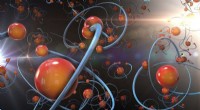
1. Fissionable Material: The core of a reactor contains fissionable material (e.g., uranium-235). This material undergoes nuclear fission, a process where the nucleus of an atom is split into two or more smaller nuclei, releasing a tremendous amount of energy and neutrons.
2. Neutron Absorption & Chain Reaction: When a neutron strikes a fissionable atom, it causes the atom to split. This fission releases more neutrons, which can then strike other fissionable atoms, creating a chain reaction.
3. Control Rods: To control the chain reaction, control rods are inserted into the reactor core. These rods absorb neutrons, slowing down the reaction rate. By adjusting the position of the control rods, the reactor's power output can be regulated.
4. Moderator: A moderator (usually water or graphite) is used to slow down the neutrons released during fission. Slow neutrons are more likely to cause fission, increasing the efficiency of the chain reaction.
5. Coolant: A coolant (often water or heavy water) circulates through the reactor core to remove the heat generated by fission. This heat is used to produce steam and generate electricity in a power plant.
6. Containment: The reactor is enclosed within a containment structure, designed to prevent the release of radioactive materials into the environment in case of an accident.
Here's a simplified analogy:
Imagine a chain reaction as a snowball rolling down a hill. Each time the snowball hits the ground, it breaks into smaller pieces, each of which becomes a new snowball, rolling further down the hill. The control rods are like barriers placed on the hill, slowing down the snowball's momentum. The moderator is like a patch of soft snow that slows down the smaller snowballs, ensuring more of them hit the ground and create more snowballs.
Key Functions of a Nuclear Reactor:
- Generating energy: The heat released from fission is used to produce electricity.
- Research and development: Reactors are used in scientific research to study nuclear reactions, create isotopes for medical applications, and explore new materials.
- Medical applications: Reactors are used to produce isotopes for medical imaging and treatment.
It's important to note that nuclear reactors are complex systems with many safety features to prevent accidents. However, they also pose risks, particularly regarding the management of radioactive waste and potential accidents.