Here's why:
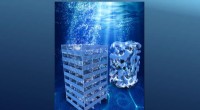
* Refraction: This is the bending of light as it passes from one medium to another (in this case, from the liquid to the object and then back to the liquid). The amount of bending depends on the difference in the speed of light in each medium.
Let's break it down:
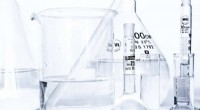
1. Light travels through the liquid: Light rays from a source hit the transparent object.
2. Light enters the object: Since the object is transparent, light passes through it. The speed of light changes slightly as it enters the object due to the different density of the object compared to the liquid.
3. Light exits the object: As the light exits the object and returns to the liquid, it bends again, slightly altering the path of the light rays.
4. Our eyes see the object: Our eyes detect the light that has passed through the object, allowing us to see its shape and location.
Why not other principles?
* Reflection: This is the bouncing back of light from a surface. While some reflection might occur, it's not the primary principle at play when you see a transparent object in a liquid.
* Diffraction: This is the spreading out of light waves as they pass through a narrow opening or around an obstacle. While diffraction might play a minor role, it's not the dominant factor.
* Absorption: This is when light is taken in by a material and converted into other forms of energy. Transparent objects don't absorb much light, allowing most of it to pass through.