Heat transfer, the movement of thermal energy from a hotter object to a colder one, occurs via three main mechanisms: conduction, convection, and radiation. Each mechanism is influenced by the properties of the substance and the environment, and they often work together in complex scenarios. Let's explore their differences across solids, liquids, gases, and combinations of substances.
1. Conduction:
* Mechanism: Transfer of heat through direct contact between molecules. Vibrating molecules in a hotter region transfer their energy to neighboring molecules, creating a chain reaction.
* Solids: Highly efficient due to close molecular packing and regular structure. Metals are excellent conductors due to free electrons.
* Liquids: Less efficient than solids due to greater spacing and less ordered structure.
* Gases: Least efficient due to large spacing between molecules and weak interactions.
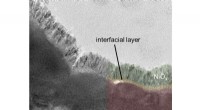
* Combinations: Conduction plays a role in composite materials, where heat transfer is affected by the thermal conductivity of each component and their interfacial contact.
2. Convection:
* Mechanism: Transfer of heat through the movement of fluids (liquids and gases). Hotter, less dense fluid rises, while colder, denser fluid sinks, creating a circulation pattern.
* Liquids: Dominant mode of heat transfer in liquids due to their fluidity. Examples: boiling water, ocean currents.
* Gases: Also dominant, responsible for weather patterns and heating/cooling systems.
* Solids: Convection can occur within porous solids or over surfaces.
* Combinations: Convection is vital in fluid-solid systems like heat exchangers, where the fluid is heated or cooled by the solid surface.
3. Radiation:
* Mechanism: Transfer of heat through electromagnetic waves, independent of medium. All objects emit and absorb radiation, with intensity depending on temperature and surface properties.
* Solids, Liquids, Gases: Radiation can occur in all states of matter.
* Combinations: Radiation plays a significant role in multi-component systems, particularly where transparent materials are involved.
Molecular Motion and Bulk Properties:
* Molecular motion: The speed and amplitude of molecular vibrations directly influence heat transfer. Higher temperatures result in greater molecular motion and faster heat transfer.
* Bulk properties: Factors like density, thermal conductivity, specific heat capacity, and surface properties all contribute to the effectiveness of each heat transfer mechanism.
Surface Properties and Industrial Processes:
* Surface properties: Surface area, color, texture, and emissivity influence radiation heat transfer.
* Industrial processes: Understanding heat transfer is crucial for designing efficient systems for heating, cooling, energy generation, and many other applications. Examples include:
* Heat exchangers: Utilizing conduction, convection, and radiation to transfer heat between fluids and solids.
* Boilers: Using conduction and convection to generate steam for power generation.
* Furnaces: Utilizing radiation to heat materials for manufacturing processes.
In summary, heat transfer is a complex phenomenon influenced by various factors. Understanding the interplay of these mechanisms in different materials and systems is essential for optimizing industrial processes and technological advancements.