1. Doping:
* Adding impurities: This is the most common and effective method. By introducing impurities (dopants) with more or fewer valence electrons than the semiconductor material, you can create either n-type or p-type semiconductors.
* n-type: Adding elements with more valence electrons (like phosphorus to silicon) creates extra free electrons, increasing conductivity.
* p-type: Adding elements with fewer valence electrons (like boron to silicon) creates "holes" which act as positive charge carriers, also increasing conductivity.
2. Temperature:
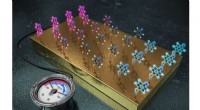
* Increasing temperature: Thermal energy can excite electrons from the valence band to the conduction band, creating more free charge carriers. This effect is significant, but becomes less pronounced at extremely high temperatures.
3. Light:
* Exposing to light: In some semiconductors, photons from light can have enough energy to excite electrons, creating electron-hole pairs and increasing conductivity. This is the basis of photoconductivity.
4. Electric Field:
* Applying a strong electric field: While not a primary method for improving conductivity, a strong electric field can accelerate existing free charge carriers, increasing current flow. This effect is mainly used for studying semiconductor properties.
Remember: The specific method and its effectiveness depend on the intrinsic material and the desired level of conductivity.