Here's how it works:
* Heat Energy and Particles: Heat is a form of energy that causes particles in a substance to vibrate or move faster.
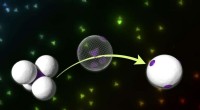
* Collision and Energy Transfer: When a warmer object (with faster-moving particles) comes into contact with a cooler object (with slower-moving particles), the faster-moving particles collide with the slower-moving ones.
* Transfer of Kinetic Energy: During these collisions, some of the kinetic energy (energy of motion) from the faster-moving particles is transferred to the slower-moving ones. This increases the vibrational energy of the slower particles, making the cooler object warmer.
Examples of Conduction:
* Heating a pot on a stove: Heat from the stovetop is transferred to the pot, then to the water inside.
* Holding a hot cup of coffee: Heat is transferred from the cup to your hand.
* A metal spoon in hot soup: The spoon heats up because of the heat transfer from the soup.
Key Characteristics of Conduction:
* Requires Direct Contact: Conduction needs the two substances to be in direct contact.
* More Efficient in Solids: Conduction is more efficient in solids because particles are closely packed, allowing for more frequent collisions.
* Less Efficient in Liquids and Gases: Conduction is less efficient in liquids and gases because particles are farther apart, reducing the frequency of collisions.