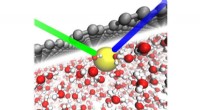
* Intermolecular Forces: Gases have very weak intermolecular forces. The molecules are far apart and interact very little. This allows them to move freely and independently, responding quickly to changes in pressure or temperature. Liquids and solids have stronger intermolecular forces that hold their molecules closer together and restrict their movement.
* Density: Gases are much less dense than liquids and solids. This means there is more space between gas molecules, giving them greater freedom to move and expand.
* Compressibility: Gases are highly compressible, meaning their volume can be easily reduced by applying pressure. This is because there is a lot of empty space between the gas molecules. Liquids and solids are much less compressible.
* Kinetic Energy: Gas molecules have higher kinetic energy (energy of motion) than liquid or solid molecules at the same temperature. This means they move faster and collide more frequently, leading to faster expansion when exposed to changes in pressure or temperature.
In summary: The combination of weak intermolecular forces, low density, high compressibility, and high kinetic energy in gases allows them to expand much faster than liquids and solids in response to changes in their environment.