* Thermal Expansion: Liquids, like most substances, expand when heated and contract when cooled. This is due to the molecules moving faster and taking up more space at higher temperatures.
* Density: Density is defined as mass per unit volume. When a liquid cools, its volume decreases (contracts), while its mass remains the same. Since the same amount of mass now occupies a smaller volume, the density increases.
Exceptions:
There are a few exceptions to this rule, mainly related to water:
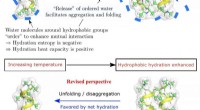
* Water's Anomalous Behavior: Water is unusual because its density reaches a maximum at 4°C (39.2°F). As water cools further, its density decreases slightly. This is due to the formation of hydrogen bonds, which cause the water molecules to arrange themselves in a less compact structure. This is why ice floats on water!
In summary:
For most liquids, cooling leads to an increase in density. However, water exhibits a unique behavior where its density peaks at 4°C, making it denser than ice.