1. The Discovery of the Atomic Nucleus:
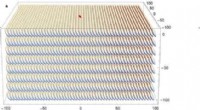
* In his famous gold foil experiment (1909-1911), Rutherford fired alpha particles (positively charged particles) at a thin sheet of gold foil.
* Surprisingly, most particles passed straight through, but a small percentage were deflected at large angles, some even bouncing back.
* This led Rutherford to propose the nuclear model of the atom, where a tiny, positively charged nucleus resides at the center, containing most of the atom's mass, while negatively charged electrons orbit around it.
* This model dramatically changed the prevalent "plum pudding model" of the atom, which suggested a uniform distribution of positive and negative charges.
2. The Discovery of Protons:
* Rutherford further investigated the structure of the nucleus and in 1919, he conducted experiments bombarding nitrogen gas with alpha particles.
* He observed the release of hydrogen nuclei (protons), leading him to conclude that protons are fundamental constituents of the nucleus.
* This discovery, along with his work on atomic structure, laid the groundwork for the development of nuclear physics.
3. The Concept of Isotopes:
* Through his work with radioactive elements, Rutherford observed that atoms of the same element could have different atomic masses.
* This led him to propose the concept of isotopes, atoms of the same element with different numbers of neutrons.
* The discovery of isotopes provided a deeper understanding of the diversity of atoms and their behavior.
4. Rutherford's Legacy:
* Rutherford's work established the fundamental principles of nuclear physics, laying the foundation for future research in nuclear chemistry, nuclear power, and nuclear weapons.
* His model of the atom is still the basis of our current understanding of atomic structure and behavior.
* He is widely recognized as the "father of nuclear physics" for his groundbreaking contributions to the field.
In summary, Ernest Rutherford's contributions to atomic theory were revolutionary, providing the basis for our modern understanding of the atom's structure and the properties of its nucleus. His experiments and theories fundamentally transformed our knowledge of matter and its behavior.