The kinetic theory of matter explains condensation beautifully by focusing on the constant motion of molecules and their interactions. Here's the breakdown:
1. Molecular Motion:
* Gas Phase: In the gas phase, molecules are far apart and move rapidly with high kinetic energy. They collide frequently and bounce off each other randomly.
* Liquid Phase: In the liquid phase, molecules are closer together, moving less freely, and with lower kinetic energy. They still collide, but they also experience attractive forces between each other.
2. Condensation: A Shift in Energy and Spacing:
* Cooling: When a gas is cooled, its molecules lose kinetic energy. They move slower and collide less frequently.
* Attractive Forces: As molecules slow down, attractive forces between them become more significant. These forces pull molecules closer together.
* Liquid Formation: Eventually, the molecules clump together, forming a liquid. The attractive forces keep the molecules close, but they still have enough energy to move around each other.
3. Dynamic Equilibrium:
* Evaporation: Even in the liquid phase, some molecules still have enough kinetic energy to break free from the attractive forces and escape into the gas phase (this is called evaporation).
* Condensation vs. Evaporation: The rate of condensation and the rate of evaporation are constantly competing.
* Saturation Point: When the rate of condensation equals the rate of evaporation, the air is said to be saturated. This is the point where no more gas can condense into liquid.
4. Role of Surface Tension:
* Condensation Nuclei: Condensation often occurs on surfaces, like dust particles or other tiny particles in the air. These surfaces provide a "nucleus" for water molecules to condense around.
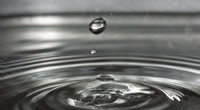
* Surface Tension: The attractive forces between water molecules create surface tension, making droplets form in a spherical shape.
In Summary: Condensation is the transition of a gas to a liquid, driven by a decrease in kinetic energy and an increase in the influence of attractive forces between molecules. It's a dynamic process where condensation and evaporation occur simultaneously, reaching an equilibrium at the saturation point.