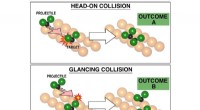
* Electrostatic Repulsion: Both sodium and potassium are alkali metals, meaning they have a single valence electron and are very electropositive. When they approach each other, their positively charged nuclei repel each other.
* Similar Electronegativity: Sodium and potassium have very similar electronegativity values. This means they have a similar tendency to attract electrons. As a result, there's no significant difference in their electron-sharing capabilities, making the formation of a covalent bond unlikely.
* Metallic Bonding: Both sodium and potassium are metals, and their primary bonding mechanism is metallic bonding. This involves a "sea" of delocalized electrons that hold the metal atoms together. They don't form strong bonds with each other.
In summary: The electrostatic repulsion between their positively charged nuclei and their similar electronegativity values prevent sodium and potassium from forming a stable bond.