1. Initial Reaction:
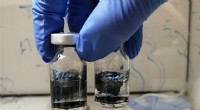
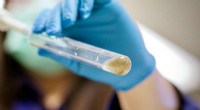
* When sodium hydroxide (NaOH) is added to a solution containing iron(II) ions (Fe²⁺), a dark green precipitate forms. This precipitate is iron(II) hydroxide (Fe(OH)₂).
* The reaction is:
Fe²⁺(aq) + 2OH⁻(aq) → Fe(OH)₂(s)
2. Oxidation:
* Iron(II) hydroxide is unstable in the presence of air (oxygen).
* Oxygen acts as an oxidizing agent, causing the iron(II) ions (Fe²⁺) to be oxidized to iron(III) ions (Fe³⁺).
* This oxidation process is slow and happens over time.
3. Formation of Iron(III) Hydroxide:
* As iron(III) ions are formed, they react with hydroxide ions (OH⁻) to form iron(III) hydroxide (Fe(OH)₃).
* Iron(III) hydroxide is a reddish-brown solid, responsible for the orange-brown color observed.
In summary:
* Initial precipitate: Dark green Fe(OH)₂
* Oxidation: Fe²⁺ → Fe³⁺ (slow process)
* Final precipitate: Orange-brown Fe(OH)₃
Factors that influence the rate of oxidation:
* Oxygen availability: Higher oxygen concentration leads to faster oxidation.
* pH: Basic conditions (higher pH) tend to favor the oxidation process.
* Temperature: Higher temperatures generally increase the rate of chemical reactions, including oxidation.