Understanding the Basics
* Glycine: Glycine is an amino acid with a pKa of 9.6. This makes it suitable for buffering around pH 9.2.
* Sodium Hydroxide (NaOH): NaOH is a strong base used to adjust the pH of the glycine solution to the desired 9.2.
Materials:
* Glycine (solid)
* Sodium Hydroxide (NaOH) (solid or solution)
* Deionized water
* pH meter (or pH indicator paper)
* Volumetric flask (1 L)
* Graduated cylinder
* Stirring apparatus (magnetic stirrer and stir bar or beaker and stirring rod)
Procedure:
1. Calculate the amount of glycine needed:
* The molecular weight of glycine is 75.07 g/mol.
* To make a 1M solution, you'll need 75.07 g of glycine per liter of solution.
* Weigh out 75.07 g of glycine.
2. Dissolve the glycine:
* Transfer the glycine to a 1 L volumetric flask.
* Add about 800 mL of deionized water to the flask.
* Stir the solution with a magnetic stirrer or stirring rod until the glycine is completely dissolved.
3. Adjust the pH:
* Using a pH meter:
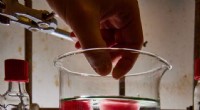
* Carefully add small portions of NaOH solution to the glycine solution while monitoring the pH with the meter.
* Add NaOH solution slowly, stirring continuously, until the pH reaches 9.2.
* Using pH indicator paper:
* Add small portions of NaOH solution to the glycine solution, stirring continuously, and checking the pH with the indicator paper.
* Continue adding NaOH until the indicator paper matches the desired pH 9.2.
4. Bring the volume to 1 L:
* Once the pH is adjusted to 9.2, add enough deionized water to the flask to bring the total volume to 1 L.
* Mix the solution thoroughly.
Important Notes:
* Safety: Always wear appropriate safety goggles and gloves when handling chemicals.
* Precision: Use a balance calibrated for accuracy to weigh the glycine.
* pH adjustment: Add NaOH solution slowly and carefully to avoid overshooting the desired pH.
* Storage: Store the buffer solution in a tightly sealed container at room temperature.
Additional Tips:
* If you need a specific volume of buffer (e.g., 500 mL), adjust the amount of glycine and NaOH accordingly.
* If you don't have a pH meter, you can use a pH indicator paper. However, the accuracy of the buffer will be lower.
* The buffer's pH will slightly change with temperature.
This procedure gives you a 1M glycine-NaOH buffer at approximately pH 9.2. If you need a highly precise pH, you might need to adjust the NaOH concentration slightly after checking with a pH meter.