Here's the breakdown:
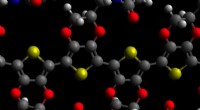
* Ionic Bond: The sodium (Na) atom loses an electron to form a positively charged sodium ion (Na+). The acetate ion (CH3COO-) gains an electron, becoming negatively charged. These oppositely charged ions are then attracted to each other via electrostatic forces, forming an ionic bond.
* Covalent Bonds: Within the acetate ion (CH3COO-), the carbon (C), hydrogen (H), and oxygen (O) atoms share electrons to form covalent bonds. These bonds are formed by the overlap of atomic orbitals, sharing electrons to achieve a stable electron configuration.
Therefore, sodium acetate is an example of a compound that has both ionic and covalent bonds.