1. Evaporation
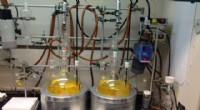
* Method: Heat the solution gently in an evaporating dish. The water will evaporate, leaving behind the hydrated copper sulfate crystals.
* Explanation: As water evaporates, the concentration of copper sulfate in the remaining solution increases. Eventually, the solution becomes saturated, and the hydrated copper sulfate crystallizes out.
* Advantages: Simple method, good for large amounts of solution.
* Disadvantages: Can be slow, requires careful heating to prevent splattering or decomposition of the copper sulfate.
2. Crystallization
* Method: Slowly evaporate the solution (e.g., by leaving it in a warm, dry place or using a desiccator) until crystals start to form. This allows for the formation of larger, more well-defined crystals.
* Explanation: Similar to evaporation, but controlled evaporation promotes larger crystals.
* Advantages: Produces larger, more visually appealing crystals.
* Disadvantages: Can be time-consuming.
3. Vacuum Filtration
* Method: After evaporation, you can speed up the separation by filtering the solution through a Buchner funnel with filter paper.
* Explanation: The vacuum draws the solution through the filter paper, leaving the crystals behind.
* Advantages: Faster than simple evaporation, can be used to separate small amounts of crystals.
* Disadvantages: Requires a Buchner funnel and vacuum filtration apparatus.
Important Considerations:
* Heating: Be careful when heating the solution. Copper sulfate can decompose at high temperatures.
* Purity: If you want very pure crystals, you may need to perform additional purification steps like recrystallization.
Let me know if you have any other questions!