The Chemistry
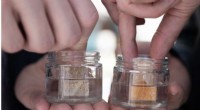
* Anhydrous Copper Sulfate: This is the white form of copper sulfate. It has no water molecules attached to its copper ions (Cu²⁺).
* Hydrated Copper Sulfate: When water is added, the anhydrous copper sulfate reacts with it to form hydrated copper sulfate. This form has water molecules bound to the copper ions.
The Color Change
* Anhydrous Form: The absence of water molecules in the anhydrous form allows the copper ions to interact with each other in a specific way that absorbs light in the visible spectrum. This results in the white color we observe.
* Hydrated Form: When water molecules attach to the copper ions, the interaction between copper ions changes. The water molecules now influence how the copper ions absorb and reflect light. This change in interaction causes the material to absorb different wavelengths of light, leading to the characteristic blue color of hydrated copper sulfate.
Simplified Explanation
Think of it like this: the water molecules act like tiny "shields" around the copper ions. These shields change how the copper ions interact with light, leading to the blue color.
In Summary
The color change from white to blue is a result of the copper ions interacting with water molecules. This creates a new chemical compound (hydrated copper sulfate) with different light-absorbing properties.