Potassium Chloride (KCl)
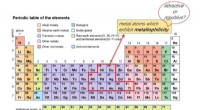
* Ionic Bonding: KCl forms an ionic bond, meaning electrons are transferred from one atom to another. Potassium (K) loses its outer electron to become a positively charged ion (K+). Chlorine (Cl) gains that electron to become a negatively charged ion (Cl-).
* Lewis Structure: The Lewis structure for KCl simply shows the ions separated by a space. You wouldn't typically draw covalent bonds because there's no sharing of electrons. It would look like this:
K+ Cl-
Hydrogen Chloride (HCl)
* Covalent Bonding: HCl forms a covalent bond, meaning electrons are shared between the hydrogen and chlorine atoms.
* Lewis Structure: The Lewis structure for HCl shows the shared pair of electrons as a line between the symbols.
H - Cl
Key Differences
* Bond Type: KCl has an ionic bond, while HCl has a covalent bond.
* Electron Transfer vs. Sharing: In KCl, electrons are transferred from potassium to chlorine. In HCl, electrons are shared between hydrogen and chlorine.
* Lewis Structure Representation: The Lewis structure for KCl shows the ions separately, while the Lewis structure for HCl shows a covalent bond.
In Summary:
The Lewis structure for KCl emphasizes the transfer of electrons and the formation of ions. The Lewis structure for HCl emphasizes the sharing of electrons and the formation of a covalent bond.