Here's why:
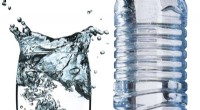
* Gases occupy a larger volume than liquids or solids. When a gas is produced in a reaction, it tries to expand, pushing its way out of the solution. This creates the bubbles you see.
* The bubbles rise to the surface. Gases are less dense than liquids, so they float upward, causing the characteristic bubbling effect.
Examples of chemical reactions that produce bubbles:
* Decomposition of hydrogen peroxide: H₂O₂ → H₂O + O₂ (oxygen gas is released)
* Reaction of an acid with a carbonate: HCl + CaCO₃ → CaCl₂ + H₂O + CO₂ (carbon dioxide gas is released)
* Electrolysis of water: H₂O → H₂ + O₂ (hydrogen and oxygen gases are released)
Important Note: While bubbling usually indicates gas evolution, it's not always the only reason. Sometimes, rapid boiling or vigorous stirring can also create bubbles.