* Ionic Nature: Na2PO3F is an ionic compound, meaning it's formed by electrostatic attraction between positively charged sodium ions (Na+) and negatively charged fluorophosphate ions (PO3F2-).
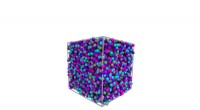
* No Discrete Molecules: There are no distinct, covalently bonded PO3F2- molecules in the solid state. Instead, the fluorophosphate ions are interconnected in a more complex 3D network.
So, how to represent it?
* Formula Unit: The chemical formula Na2PO3F represents the simplest ratio of ions in the compound.
* Structural Diagram of the Fluorophosphate Ion (PO3F2-): You can draw a Lewis structure showing the connectivity and arrangement of atoms within the fluorophosphate ion:
- The central phosphorus atom is surrounded by three oxygen atoms and one fluorine atom.
- Two of the oxygen atoms are each connected to a single bond with phosphorus and carry a formal negative charge.
- The third oxygen is double-bonded to phosphorus.
- The fluorine atom is single-bonded to phosphorus.
Important Note: The actual arrangement of these ions in the solid state is complex and likely involves a network of interconnected fluorophosphate ions. This network structure is hard to represent in a simple diagram.
In Summary: While we can represent the fluorophosphate ion (PO3F2-) structurally, Na2PO3F itself is best understood as a combination of sodium ions and a network of fluorophosphate ions in a solid lattice.