* Compound: A compound is formed when two or more different elements chemically combine in a fixed ratio. The resulting compound has entirely new properties distinct from its constituent elements. For example, water (H2O) is a compound because it's formed by the chemical bonding of hydrogen and oxygen atoms.
* Mixture: A mixture is a combination of two or more substances where each substance retains its individual properties. The components of a mixture can be separated by physical means.
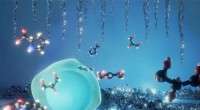
When CO2 dissolves in water, it forms carbonic acid (H2CO3) through a reversible reaction. However, this is a chemical change, not a compound formation. The CO2 and water molecules are still present in the mixture, and the carbonic acid can be separated by physical means (like heating).
Key Points:
* The CO2 and water molecules retain their individual properties in the mixture.
* The chemical reaction to form carbonic acid is reversible, meaning it can go back and forth.
* You can separate the CO2 from the water by physical means.
Therefore, CO2 in water is best classified as a mixture because it's a combination of two substances that retain their individual properties.