Here's why:
* Aluminum is a reactive metal: It readily reacts with acids, including hydrochloric acid (HCl).
* Reaction process: The reaction produces aluminum chloride (AlCl3) and hydrogen gas (H2). The chemical equation for this reaction is:
2Al(s) + 6HCl(aq) → 2AlCl3(aq) + 3H2(g)
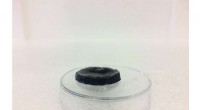
* Observation: When you place aluminum in hydrochloric acid, you'll see bubbles of hydrogen gas forming and the aluminum metal dissolving.
Why there might be confusion:
* Aluminum oxide layer: Aluminum has a thin, protective layer of aluminum oxide (Al2O3) on its surface. This layer is relatively unreactive and can prevent further reaction with weak acids.
* Concentrated acid: With very concentrated hydrochloric acid, the reaction can be slowed down or even stopped due to the formation of a protective layer of aluminum chloride.
In summary: Aluminum reacts with hydrochloric acid, but the reaction rate can be influenced by factors like the concentration of the acid and the presence of the aluminum oxide layer.