1. Early Earth (4.5 billion years ago - 3.8 billion years ago):
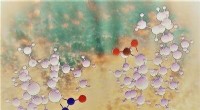
* Volcanic Outgassing: The Earth's early atmosphere was dominated by gases released from volcanoes, primarily water vapor (H2O), carbon dioxide (CO2), nitrogen (N2), sulfur dioxide (SO2), methane (CH4), and ammonia (NH3). This period is known as the Hadean eon.
2. The First Atmosphere (3.8 billion years ago - 2.5 billion years ago):
* Cooling and Condensation: As Earth cooled, water vapor condensed into liquid water, forming oceans. This process removed significant amounts of water vapor from the atmosphere.
* Photodissociation: The Sun's ultraviolet radiation broke down water vapor into hydrogen (H2) and oxygen (O2). The hydrogen escaped into space, while oxygen remained in the atmosphere.
3. The Great Oxidation Event (2.5 billion years ago - 2.3 billion years ago):
* Photosynthesis: The evolution of photosynthetic cyanobacteria, which used sunlight to convert carbon dioxide and water into energy, dramatically increased oxygen levels in the atmosphere. This event, known as the Great Oxidation Event, transformed Earth's atmosphere and led to the development of complex life.
4. Present Day Atmosphere:
* Nitrogen (N2): Now the dominant gas, nitrogen is largely inert and has been accumulating in the atmosphere for billions of years.
* Oxygen (O2): The product of photosynthesis, oxygen is essential for most life on Earth.
* Argon (Ar): A noble gas, argon is a byproduct of radioactive decay.
* Carbon Dioxide (CO2): Present in much lower concentrations than in the early atmosphere, CO2 is still a crucial greenhouse gas.
* Other Gases: Trace amounts of other gases, such as methane, ozone, neon, helium, and krypton, are also present in the atmosphere.
Important Note:
* The composition of the atmosphere is not static and is constantly changing due to natural processes like volcanic activity and human activity.
* The current atmospheric composition is a result of a complex interplay of geological, biological, and chemical processes over billions of years.
* Understanding the history of Earth's atmosphere is crucial for understanding the evolution of life and the challenges we face today, like climate change.