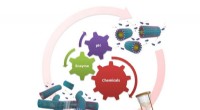
1. Concentration of Reactants: Higher concentrations of reactants lead to more frequent collisions between reactant molecules, increasing the likelihood of successful reactions.
2. Temperature: Increasing the temperature provides reactant molecules with more kinetic energy, resulting in more frequent and energetic collisions. This leads to a higher proportion of collisions with enough energy to overcome the activation energy barrier, speeding up the reaction.
3. Surface Area: For reactions involving solids, increasing the surface area of the solid reactant exposes more of its molecules to the other reactants, increasing the rate of collision and reaction. Think of how a wood chip burns slower than sawdust.
4. Presence of a Catalyst: Catalysts speed up reactions without being consumed themselves. They provide an alternative reaction pathway with a lower activation energy, increasing the rate at which molecules can overcome the energy barrier.
5. Nature of Reactants: The inherent properties of the reactants themselves play a role. Some molecules react readily, while others require more energy to break bonds and form new ones. The chemical structure and bonding within the reactants influence the likelihood and speed of the reaction.