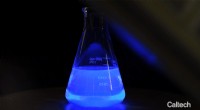
Here's the breakdown:
* Copper (Cu) is more reactive than silver (Ag). This means copper can displace silver from its compound.
* In the solution, silver nitrate (AgNO₃) is present as silver ions (Ag⁺) and nitrate ions (NO₃⁻).
* Copper atoms donate electrons to silver ions, causing the silver ions to become neutral silver atoms (Ag).
* The copper atoms become copper ions (Cu²⁺) and enter the solution.
* The overall reaction is: Cu(s) + 2AgNO₃(aq) → Cu(NO₃)₂(aq) + 2Ag(s)
The silver metal formed on the surface of the copper is what you will observe. This reaction is often used to demonstrate the concept of reactivity series in chemistry.