Here's what happens:
* The reactants:
* Copper(II) sulfate (CuSO₄) is a blue crystalline solid that dissolves in water to form blue ions.
* Lead(II) nitrate (Pb(NO₃)₂) is a white crystalline solid that also dissolves in water to form colorless ions.
* The reaction: When you mix solutions of copper(II) sulfate and lead(II) nitrate, the ions switch partners. This results in the formation of two new products:
* Lead(II) sulfate (PbSO₄): This is a white, insoluble solid that precipitates out of solution as a solid.
* Copper(II) nitrate (Cu(NO₃)₂): This is a blue solution that remains dissolved.
* The balanced chemical equation:
CuSO₄(aq) + Pb(NO₃)₂(aq) → PbSO₄(s) + Cu(NO₃)₂(aq)
Key observations:
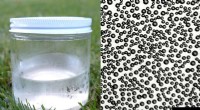
* Formation of a precipitate: The most obvious sign of the reaction is the formation of a white solid (lead(II) sulfate) that settles to the bottom of the container.
* Color change: The solution will change color from blue (copper(II) sulfate) to a lighter blue or colorless (copper(II) nitrate).
Applications:
This reaction has several practical applications:
* Lead poisoning treatment: Lead sulfate is less soluble than lead nitrate, making it less easily absorbed into the body. This reaction is sometimes used to help remove lead from the body in cases of lead poisoning.
* Preparation of lead(II) sulfate: Lead(II) sulfate is used in the production of batteries, pigments, and other materials.
Let me know if you have any other questions about this reaction!