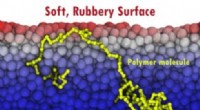
* Intermolecular Forces: Liquid molecules are held together by attractions like hydrogen bonds, dipole-dipole interactions, and London dispersion forces. These forces keep the molecules close together.
* Energy Input: To transition from a liquid to a gas, the molecules need to overcome these attractive forces and move further apart. This requires an input of energy.
* Heat Energy: The energy required to break these bonds is usually supplied as heat. As the liquid absorbs heat, the molecules gain kinetic energy, causing them to vibrate and move faster.
* Phase Change: When enough energy is absorbed, the molecules overcome the intermolecular forces, break free from the liquid, and enter the gaseous state. This phase change is called vaporization.
Think of it like this: Imagine you have a bunch of magnets stuck together. To separate them, you need to apply energy. The more energy you apply, the further apart the magnets will move. In the case of liquids and gases, heat provides the energy to separate the molecules.
The temperature increase is a reflection of the increased kinetic energy of the molecules as they transition from the liquid to the gaseous state.