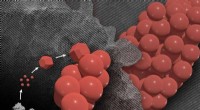
Water hydration, or solvation, is a process where water molecules surround and interact with a solute molecule, forming a hydration shell. This process is crucial for many chemical and biological processes, including dissolving salts, transporting molecules, and protein folding. While the exact mechanisms are complex and depend on the specific solute, several theories attempt to explain the interactions and phenomena associated with hydration.
1. Electrostatic Interactions:
* This theory focuses on the interactions between the polar water molecules and the charged or polar groups of the solute.
* Water molecules orient themselves around the solute based on their charges: positive poles towards negative groups and negative poles towards positive groups.
* These electrostatic interactions contribute significantly to the hydration enthalpy and hydration entropy of the process.
2. Hydrogen Bonding:
* This theory highlights the hydrogen bonding between water molecules and the solute.
* Hydrogen bonds form between the hydrogen atoms of water molecules and the electronegative atoms (like oxygen or nitrogen) of the solute.
* These strong intermolecular forces contribute significantly to the stability of the hydration shell and influence the solubility of the compound.
3. Hydrophobic Effect:
* This theory focuses on the interactions between non-polar solutes and water molecules.
* Non-polar solutes disrupt the hydrogen bonding network of water, which is energetically unfavorable.
* To minimize this disruption, water molecules aggregate around the non-polar solute, forming a hydrophobic shell.
* This effect is important for the folding of proteins and the formation of lipid bilayers.
4. Specific Interactions:
* This theory acknowledges the existence of unique interactions between water molecules and specific functional groups of the solute.
* These interactions can be electrostatic, hydrogen bonding, or even van der Waals forces.
* Specific interactions can significantly influence the solubility, reactivity, and biological activity of the compound.
5. Computer Simulations:
* Modern advancements in computational chemistry allow for the modeling of hydration phenomena at the atomic level.
* Molecular dynamics simulations can provide insights into the dynamics and energetics of water molecules surrounding a solute.
* These simulations help to validate and refine theoretical models of hydration.
In Conclusion:
Understanding the theories of water hydration is crucial for comprehending many important chemical and biological processes. The interplay of electrostatic interactions, hydrogen bonding, hydrophobic effects, specific interactions, and computer simulations provides a comprehensive framework for describing the hydration process. Further research and experimentation continue to refine our understanding of these intricate and complex phenomena.