Here's why:
* Aqueous Solution: This means the solvent is water (H₂O).
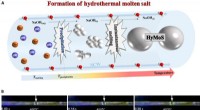
* Dissolving: This process involves the solute particles (solid in this case) separating from each other and becoming surrounded by solvent molecules (water).
How it Works:
1. Attraction: The water molecules have a polar structure (positive and negative ends). They are attracted to the solute particles, which can be either polar or ionic.
2. Surrounding: The water molecules surround the solute particles, effectively pulling them away from the solid structure.
3. Solution: If the attractive forces between the water molecules and the solute particles are stronger than the forces holding the solute together, the solid will dissolve.
Examples:
* Salt (NaCl) dissolving in water: The ionic bonds in salt are broken, and the sodium (Na+) and chloride (Cl-) ions are surrounded by water molecules.
* Sugar (C₁₂H₂₂O₁₁) dissolving in water: The polar sugar molecules form hydrogen bonds with water molecules, pulling them into solution.
Important Note: Not all solids dissolve in water. The solubility of a solid depends on several factors, including:
* Polarity of the solute: Polar and ionic solutes are more likely to dissolve in water.
* Temperature: Increasing temperature usually increases solubility.
* Pressure: Pressure has a negligible effect on the solubility of solids in liquids.