Here's a breakdown:
* Water is polar: It has a positive end (hydrogen) and a negative end (oxygen). This polarity allows water molecules to form strong hydrogen bonds with each other.
* Hydrophobic compounds are nonpolar: They lack a significant positive or negative charge. This makes it difficult for them to form hydrogen bonds with water molecules.
* Repulsion: Because hydrophobic compounds can't form strong bonds with water, they tend to cluster together, minimizing their contact with water. This creates a "water-repelling" effect.
Examples of hydrophobic compounds:
* Fats and oils: These are composed of long chains of hydrocarbons, which are nonpolar.
* Waxes: Similar to fats and oils, waxes are also nonpolar.
* Many types of plastics: Plastics like polyethylene and polypropylene are made of nonpolar molecules.
Consequences of hydrophobicity:
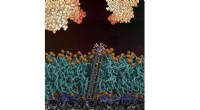
* Formation of cell membranes: Hydrophobic molecules like phospholipids are essential for forming the cell membranes that surround all living cells. The hydrophobic tails of these molecules face inwards, creating a barrier that separates the watery interior of the cell from the watery environment outside.
* Solubility: Hydrophobic compounds do not readily dissolve in water. This is why oil and water don't mix.
* Importance in biological systems: Hydrophobicity plays a crucial role in many biological processes, including protein folding, enzyme activity, and the formation of cell structures.
In essence, hydrophobic compounds are molecules that "fear" water, preferring to interact with other nonpolar molecules instead. Their unique properties have profound implications for a wide range of biological and chemical processes.