1. Starting Materials
* Iron (Fe): Iron exists as a solid metal with a lattice structure. Iron atoms are held together by strong metallic bonds.
* Sulfur (S): Sulfur exists as a solid with a crystalline structure. Sulfur atoms are connected in a ring-like structure by covalent bonds.
2. The Reaction
* Heating: When iron and sulfur are heated together, the particles gain energy. This energy weakens the bonds holding the iron and sulfur atoms together.
* Breaking Bonds: The increased energy causes the bonds between iron atoms and sulfur atoms to break.
* Rearrangement: Iron atoms lose electrons, becoming positively charged ions (Fe²⁺). Sulfur atoms gain electrons, becoming negatively charged ions (S²⁻).
* Formation of New Bonds: The oppositely charged ions attract each other and form strong ionic bonds, creating iron sulfide (FeS). This is a new compound with different properties than the original iron and sulfur.
3. The Resulting Compound
* Iron Sulfide (FeS): Iron sulfide is a solid compound with a different crystal structure than either iron or sulfur. Its particles are held together by ionic bonds.
Visualizing the Reaction
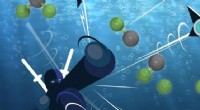
Imagine the iron and sulfur particles as tiny balls. In the starting materials, these balls are arranged in specific patterns (the lattice and the crystal structures). When heat is applied, the balls start to vibrate faster and move around more. The energy from the heat breaks the bonds holding the balls together. The iron balls lose electrons and become positively charged, while the sulfur balls gain electrons and become negatively charged. These oppositely charged balls then attract each other and bond together, forming a new arrangement of balls – iron sulfide.
Key Points
* Energy is required: The reaction between iron and sulfur requires energy (heat) to overcome the initial bond strengths.
* Bonds are broken and formed: Existing bonds are broken in the reactants, and new bonds are formed in the product.
* Electron transfer: The reaction involves the transfer of electrons from iron to sulfur, creating ions.
Let me know if you'd like more details on any specific aspect of the reaction!