1. Polar Molecules:
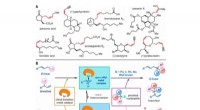
* Definition: A molecule with an uneven distribution of electrons, resulting in a positive and negative end. This creates a dipole moment, like a tiny magnet.
* Examples: Water (H₂O), ammonia (NH₃), ethanol (C₂H₅OH)
* Importance: Polar molecules are essential for life. They are good solvents (like water dissolving sugar), can form hydrogen bonds (important for DNA and proteins), and influence chemical reactions.
2. Polar Covalent Bonds:
* Definition: A type of covalent bond where electrons are shared unequally between two atoms. This occurs when one atom is more electronegative than the other, attracting the electrons more strongly.
* Examples: The bond between oxygen and hydrogen in water (O-H).
* Importance: These bonds create the uneven charge distribution that makes molecules polar.
3. Polar Coordinates:
* Definition: A system of describing a point in space using its distance from a central point (radius) and its angle relative to a reference line (angle).
* Examples: Used in mathematics, physics, and engineering to describe positions, velocities, and other quantities.
* Importance: Polar coordinates are often more convenient than Cartesian coordinates (x, y, z) for describing circular or spiral patterns.
4. Polar Regions:
* Definition: The regions around the Earth's North and South poles, characterized by cold temperatures and long periods of darkness or daylight.
* Examples: The Arctic and Antarctic.
* Importance: Polar regions play a vital role in regulating the Earth's climate, and are home to unique ecosystems and biodiversity.
5. Polarized Light:
* Definition: Light waves that oscillate in a single plane, rather than in all directions.
* Examples: Polarizing sunglasses, 3D movie glasses, and some optical instruments use polarized light.
* Importance: Polarized light can be used to filter out glare, improve image clarity, and study the properties of materials.
To understand the meaning of "polar" in a specific context, you need to consider the subject being discussed. If you provide me with more information about the context, I can give you a more precise answer.