* Water's States: Water exists in three states: solid (ice), liquid (water), and gas (water vapor).
* Wetness: "Wet" refers to the sensation of a liquid coming into contact with a surface, making it feel damp.
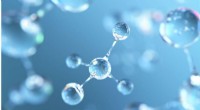
* Water's Properties: Water is a liquid because its molecules are held together by strong hydrogen bonds. These bonds allow water molecules to move around freely, but not too freely. This is what gives water its liquid properties.
Here's a simplified explanation:
Imagine water molecules like tiny balls. In a gas, these balls are far apart and move around randomly. In a liquid, the balls are close together but can still move around. In a solid (ice), the balls are locked in a rigid structure.
So, why does water make things wet?
Water molecules are attracted to other molecules, including those on surfaces. When water comes into contact with a surface, its molecules stick to the surface, creating a thin layer of water. This is what makes the surface feel wet.
The gas part:
While water vapor is a gas, it doesn't make water wet. Water vapor is just water molecules that have escaped from the liquid and are floating in the air. They only become liquid again when they cool down and condense.
In short: Water is wet because of its liquid properties and its ability to adhere to surfaces. It's not because it's made of a gas.