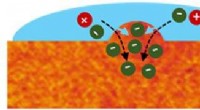
Here's how it works:
* Heat Energy: When a liquid absorbs enough heat energy, the molecules within it start moving faster and faster.
* Overcoming Intermolecular Forces: The molecules in a liquid are held together by weak forces of attraction called intermolecular forces. As the molecules move faster, they overcome these forces and break free from the liquid state.
* Expansion: The now free molecules spread out and fill the available space, becoming a gas.
There are two main types of vaporization:
1. Evaporation: This occurs at the surface of a liquid when some molecules have enough energy to escape into the air. Think of a puddle drying up in the sun.
2. Boiling: This happens when the liquid reaches its boiling point, where the vapor pressure of the liquid equals the surrounding atmospheric pressure. This allows the liquid to turn into gas throughout its volume, not just at the surface. Think of water boiling on the stove.
So, to summarize: Heat energy causes a liquid to change into a gas, not the other way around.