* Gases exist above their boiling point. By definition, a gas is already in its gaseous state at normal temperatures and pressures.
* Melting point refers to the transition from solid to liquid. Gases skip the solid phase, so they don't have a traditional melting point.
However, we can still discuss the concept of "condensation" and "sublimation" when it comes to gases:
* Condensation: This is the process where a gas changes into a liquid. The temperature at which this occurs is called the condensation point. This is essentially the same as the boiling point, but in reverse.
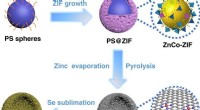
* Sublimation: This is the process where a solid changes directly into a gas, skipping the liquid phase. The temperature at which this occurs is called the sublimation point.
Think of it this way:
* Boiling point: The temperature at which a liquid turns into a gas.
* Condensation point: The temperature at which a gas turns into a liquid (same as the boiling point).
* Melting point: The temperature at which a solid turns into a liquid.
* Sublimation point: The temperature at which a solid turns into a gas.
Examples:
* Water: The boiling point of water is 100°C (212°F). This is also its condensation point.
* Carbon dioxide (CO2): CO2 is a gas at room temperature. However, it has a sublimation point of -78.5°C (-109.3°F). This means that solid CO2 (dry ice) will directly turn into a gas at this temperature.
In essence, while gases don't have a "boiling point" or "melting point" in the classic sense, they do have specific temperatures at which they change states through condensation or sublimation.