1. Increased Kinetic Energy:
The most fundamental change is an increase in the kinetic energy of the particles. This means the particles move faster and vibrate more vigorously.
2. Increased Spacing:
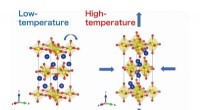
As the particles move faster, they collide more frequently and with greater force. This increased movement causes them to spread out, leading to an expansion of the substance. This is why solids expand when heated, liquids expand slightly more, and gases expand significantly.
3. Changes in State:
Depending on the temperature and the substance itself, the increased kinetic energy can cause a change in state:
* Solid to Liquid (Melting): As a solid is heated, its particles gain enough energy to break free from their rigid structure and move more freely, resulting in a liquid.
* Liquid to Gas (Boiling/Evaporation): Further heating gives the particles enough energy to overcome the forces holding them together in the liquid state, allowing them to escape into the gaseous phase.
4. Changes in Chemical Properties:
In some cases, extreme heating can break chemical bonds within the substance, leading to decomposition or chemical reactions. This can result in the formation of new substances with different properties.
5. Other Effects:
Depending on the specific substance, heating can also lead to other effects such as:
* Color Changes: Heating can alter the way light interacts with a substance, leading to changes in color.
* Luminescence: Some substances emit light when heated, a phenomenon known as incandescence.
* Changes in Electrical Conductivity: Heating can alter the electrical conductivity of certain materials.
In summary: Heating a substance causes its particles to move faster, spread out, and potentially change state. These changes can have a variety of effects on the physical and chemical properties of the substance.