1. Chemical Analysis:
* Elemental Analysis: This involves breaking down the substance into its constituent elements and determining their proportions. This can be done using techniques like:
* Spectroscopy: Analyzing the light emitted or absorbed by the substance to identify the elements present.
* Mass Spectrometry: Separating ions based on their mass-to-charge ratio to identify elements and their isotopes.
* Composition: If the substance is found to be composed of only one type of atom, it is an element. If it contains two or more different types of atoms chemically bonded together, it is a compound.
2. Physical Properties:
* Melting Point and Boiling Point: Elements tend to have distinct and fixed melting and boiling points. Compounds have different melting and boiling points compared to their constituent elements.
* Density: Elements have specific densities, while compounds often have densities different from their constituent elements.
* Solubility: Elements and compounds can have different solubilities in various solvents.
* Conductivity: Elements like metals are good conductors of electricity and heat, while compounds can be insulators or semiconductors.
3. Chemical Reactivity:
* Chemical Reactions: Elements and compounds react differently with other substances. For example, elements may react with oxygen to form oxides, while compounds may undergo specific reactions based on their molecular structure.
4. Chemical Formulas:
* Empirical Formula: The simplest whole-number ratio of atoms in a compound.
* Molecular Formula: The actual number of each type of atom in a molecule of a compound.
5. Other Techniques:
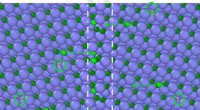
* Crystallography: Examining the arrangement of atoms in a crystal structure can provide insights into the composition and bonding of a substance.
* Nuclear Magnetic Resonance (NMR) Spectroscopy: This technique provides information about the arrangement of atoms and their bonding within a molecule.
It's important to note that determining whether a substance is an element or compound often involves a combination of these methods to obtain conclusive evidence.