Understanding the Basics
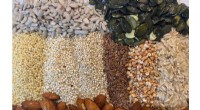
* Mixtures: Combinations of two or more substances that are physically combined but not chemically bonded. They can be separated by physical means.
* Compounds: Two or more elements chemically bonded together in a fixed ratio. They have new properties distinct from their constituent elements and can only be separated by chemical reactions.
Procedures for Identifying Differences
1. Visual Inspection:
* Mixtures: Often have heterogeneous appearance (different parts visible), like sand and water, or oil and water.
* Compounds: Typically homogeneous (uniform throughout), like salt dissolved in water.
2. Separation Techniques:
* Mixtures: Can be separated by physical means like:
* Filtration: Separating solids from liquids (e.g., sand from water).
* Evaporation: Separating a dissolved solid from a liquid (e.g., salt from water).
* Distillation: Separating liquids based on boiling points (e.g., ethanol from water).
* Magnetism: Separating magnetic materials from non-magnetic ones (e.g., iron filings from sand).
* Compounds: Cannot be separated by physical means. They require chemical reactions to break the bonds.
3. Properties:
* Mixtures: The components retain their original properties. For example, in a mixture of iron filings and sand, both iron and sand maintain their individual magnetic and chemical properties.
* Compounds: The compound has new properties distinct from its constituent elements. For example, water (H₂O) is a liquid with a different boiling point, density, and chemical reactivity compared to hydrogen (H₂) and oxygen (O₂).
4. Composition:
* Mixtures: The ratio of components can vary. You can make a mixture of salt and water with different amounts of salt.
* Compounds: The ratio of elements is fixed and constant. Water always has a 2:1 ratio of hydrogen to oxygen atoms.
Examples
* Mixture: Salt and pepper, air, sand and water.
* Compound: Water (H₂O), table salt (NaCl), carbon dioxide (CO₂).
Key Points
* Chemical bonding: This is the defining difference. Mixtures lack chemical bonding; compounds have it.
* Separation: Physical methods work on mixtures; chemical methods are needed for compounds.
* Properties: Mixtures retain original properties; compounds have new properties.
Let me know if you'd like more examples or explanations!