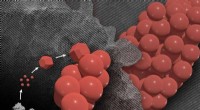
* Carbon dioxide gas (CO2): This is the most noticeable result, as it causes fizzing and bubbling.
* Salt: This is formed from the metal cation in the carbonate and the anion from the acid.
* Water: This is produced as a byproduct of the reaction.
Here's a general equation for the reaction:
* Acid + Carbonate → Salt + Water + Carbon Dioxide
Example:
* Dilute hydrochloric acid (HCl) + Calcium carbonate (CaCO3) → Calcium chloride (CaCl2) + Water (H2O) + Carbon Dioxide (CO2)
Key Points:
* The strength of the acid: Stronger acids will react more vigorously, producing more CO2 gas.
* The type of carbonate: Different carbonates will react at different rates, depending on their solubility and reactivity.
* The temperature: Increasing the temperature can speed up the reaction rate.
Applications:
This reaction has various applications, including:
* Testing for carbonates: The fizzing of CO2 is a common test to identify carbonates.
* Baking: Baking soda (sodium bicarbonate) is a carbonate used as a leavening agent in baking.
* Antacids: Some antacids contain carbonates that neutralize excess stomach acid.
Safety Precautions:
* Diluted acid can be corrosive. Wear appropriate safety gear, such as goggles and gloves, when handling acids.
* Carbon dioxide gas is heavier than air and can displace oxygen in enclosed spaces. Ensure adequate ventilation.